

01 / 08
Grove
Harvest
Poles and nets spread beneath the olive trees, as it has been done in the Douro for generations.
24
hours, at most, to the mill
Around 2,000,000 kg of olives per harvest, pressed on the same day they are picked.
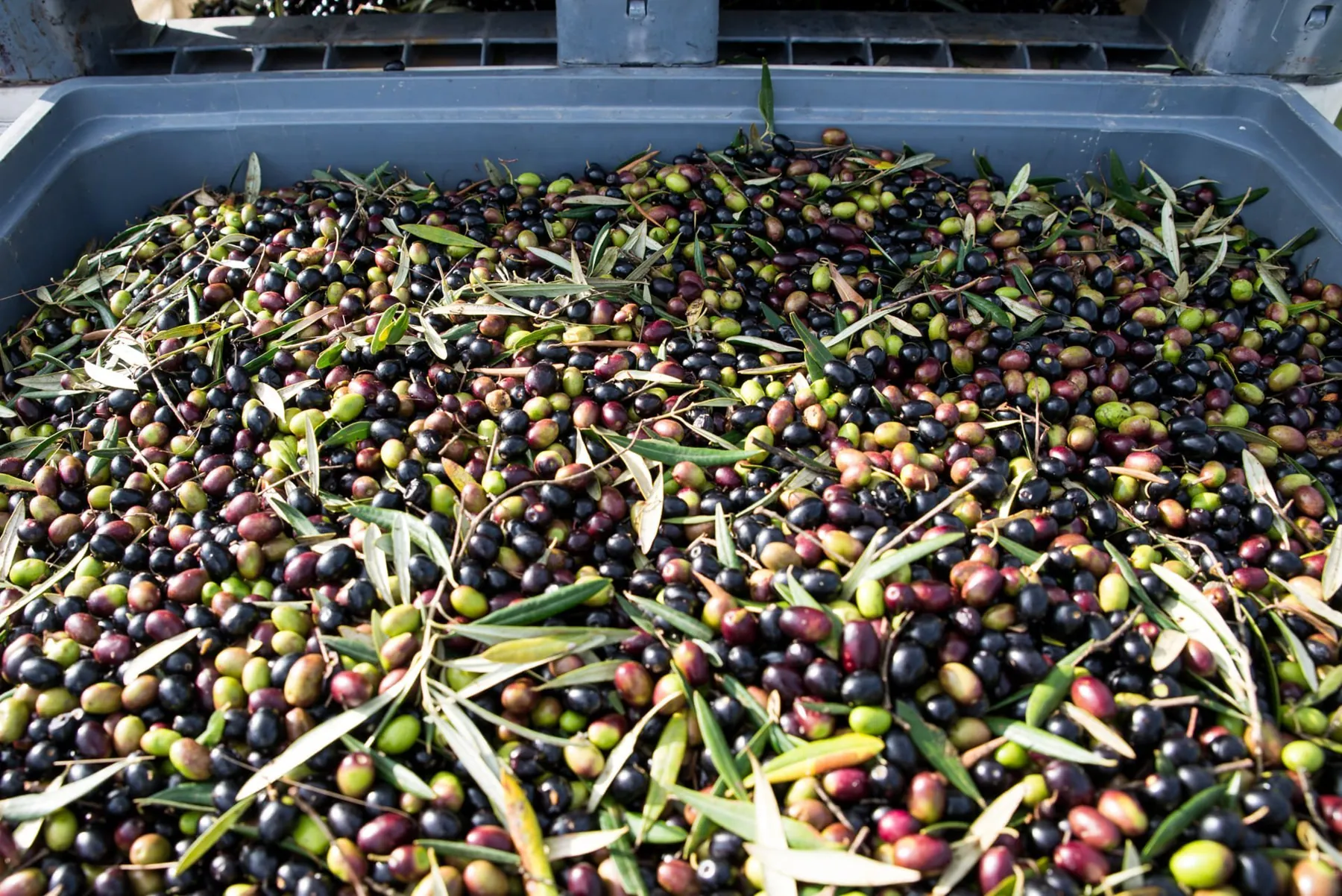
Rain-fed groves prevail in Trás-os-Montes and the Upper Douro. The traditional method is beating: poles knock the olives onto tarpaulins or nets spread on the ground.
The olives travel in perforated crates, so they can breathe, or loose, and are milled within 24 hours of picking.
Extraction is done cold, below 27 °C, to preserve the oil's sensory properties and phenolic compounds.
Poles and nets spread beneath the olive trees, as it has been done in the Douro for generations.
Leaves, twigs, stones and soil are removed. Each batch is weighed and labelled in its own crates.
The olives are crushed into a paste, which goes on to the malaxers.
Slow, continuous movements for 50 to 60 minutes make the first separation of the oil.
The paste separates into two phases: clarified oil and olive pomace.
Removes residual water and any remaining liquid impurities from the oil.
The oil is weighed to know the yield of the olives, and acidity is checked by titration.
It settles away from light and oxygen until bottling.
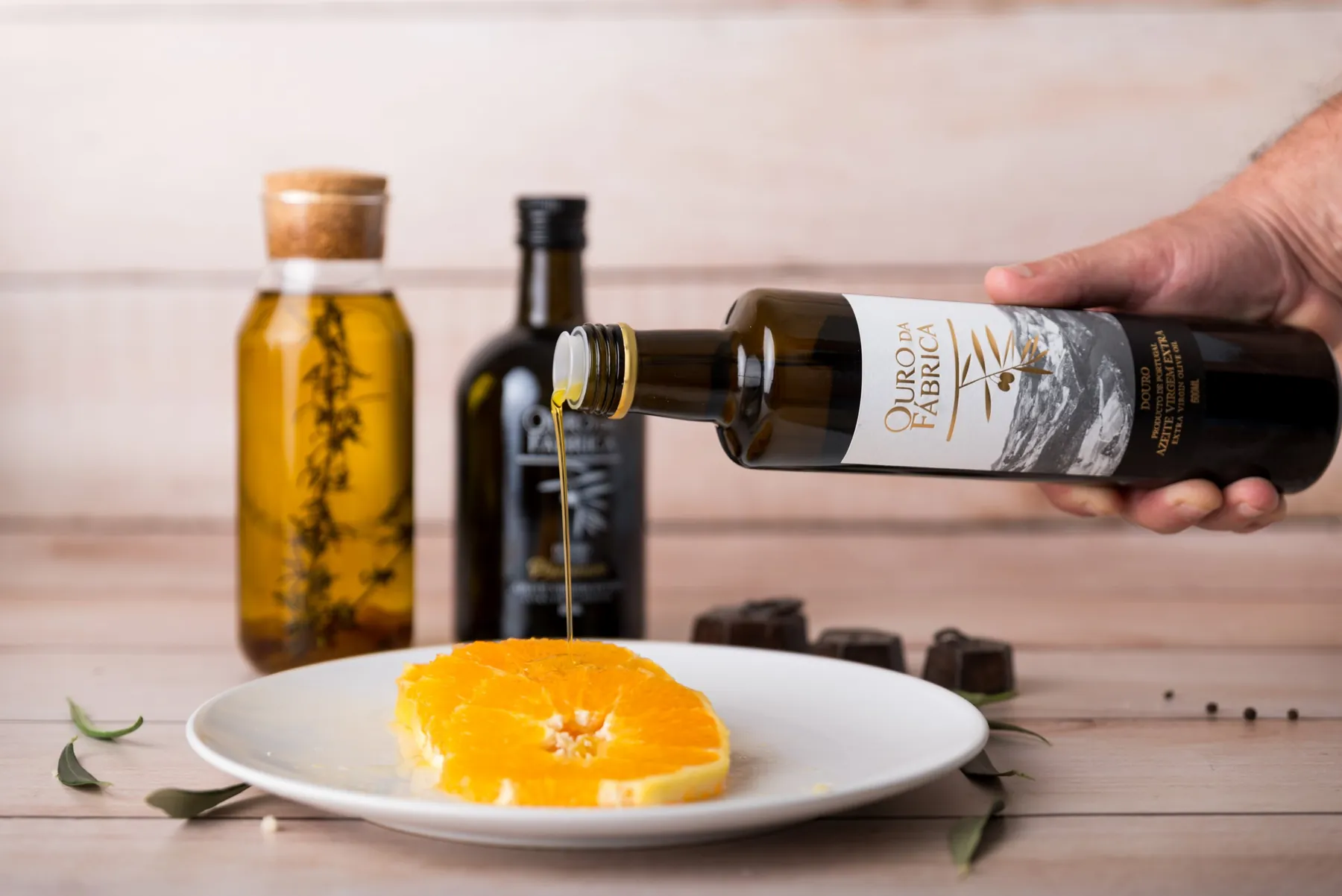
Besides the Ouro da Fábrica brand, the mill supports small farmers in the region. We lend our own crates for transport, so the olives arrive without being crushed or damaged. You can also bring them loose.
What matters is delivering them on the day of picking: the olives are milled that same day.